Ice Arena Locker Rooms: A Guide for Rink Operators
Ice Arena Locker Rooms: A Guide for Rink Operators and Arena Managers
An arena change room is not a school locker room with a colder floor. It serves a different group every ninety minutes, nobody who uses it owns it, and it never gets an off-season. Most of the advice written about athletic lockers assumes a single team and a quiet summer, and almost none of it survives contact with a rink. This guide is written for the people who actually run the building.
We build change rooms for arenas, rinks and ice facilities across North America, and the operators we work with have a specific set of problems: wet gear, skate blades, back-to-back bookings, shared responsibility, and a budget that has to justify itself against ice time revenue rather than an athletic department line. Those problems have reasonably good answers. They are just different answers.
Key Takeaways
- Arena rooms are judged on turnover and durability, not personalisation, a different group uses the space every ninety minutes.
- Skate blades and wet gear are the two forces that destroy change rooms. Both are design problems, not cleaning problems.
- Budget lockers that last eight years in a school can fail in three in a rink. Cost per year of service is the only number that matters.
- A room with proper stalls is a direct argument for a higher booking rate with contracted users.
- Design around hockey, the most demanding user, and every lighter user is comfortably served.
In This Guide
- What makes an arena room different
- The two forces that destroy change rooms
- Designing for turnover
- Shared rooms versus contracted-user rooms
- Wet gear, drainage and airflow
- Skate blades and what they do to a locker
- Security in a room nobody owns
- What this costs, per locker
What Makes an Arena Room Different
A high school locker room serves one roster. The same thirty athletes use the same thirty stalls all season, they know each other, and if something gets broken there is a reasonably short list of who did it. The room gets a quiet summer for repairs.
An arena change room serves minor hockey at six in the morning, a figure skating club at eight, a school group at noon, an adult league at ten at night, and a tournament all weekend. None of those groups owns the room. None of them will be there tomorrow. And in most buildings the room never gets a month off.
Three consequences follow from that, and they drive every decision below.
Nobody is responsible. Shared spaces take more abuse than owned spaces. This is not cynicism, it is just how shared infrastructure works. Specify accordingly.
Turnover is the constraint. If the room cannot be cleared, wiped and reset in the gap between bookings, your schedule suffers. Everything in the room should be easy to clear and easy to see into.
The room is a sales tool. Operators competing for contracted users, junior programmes, academies, spring leagues, tournament organisers, are compared on their change rooms. A tired bench-and-hook room costs you bookings you never hear about.
The Two Forces That Destroy Change Rooms
Almost every failure we are asked to replace comes down to one of two things.
Water
Hockey gear arrives wet and leaves wetter. In a school room, gear dries between sessions. In a rink, the next group is forty minutes away. Water reaches the floor, the bench, the base of every unit, and stays there.
Water is why metal change room lockers fail early. Powder coat chips at corners and edges first, moisture sits in the chip, and corrosion starts from the inside of the panel where nobody sees it until the door stops closing. Rinks accelerate this enormously compared with a dry school corridor.
Water is also why particleboard and laminate units have no business in an arena. Any moisture that reaches the core swells it, and once a panel swells it never recovers.
Steel
Skate blades are carried, dropped, dragged and stood on. They gouge wood, dent metal, and cut laminate. There is no finish that is immune, and anybody who tells you otherwise has not run a rink.
The honest goal is not a locker that resists skates. It is a locker whose damage stays cosmetic rather than structural, and whose damaged part can be replaced without replacing the unit. Solid wood takes a gouge and keeps working. A dented metal door often stops closing, and a door that will not close is a unit out of service.
Designing for Turnover
The gap between bookings is where arena rooms are won or lost. A few specifics make a real difference.
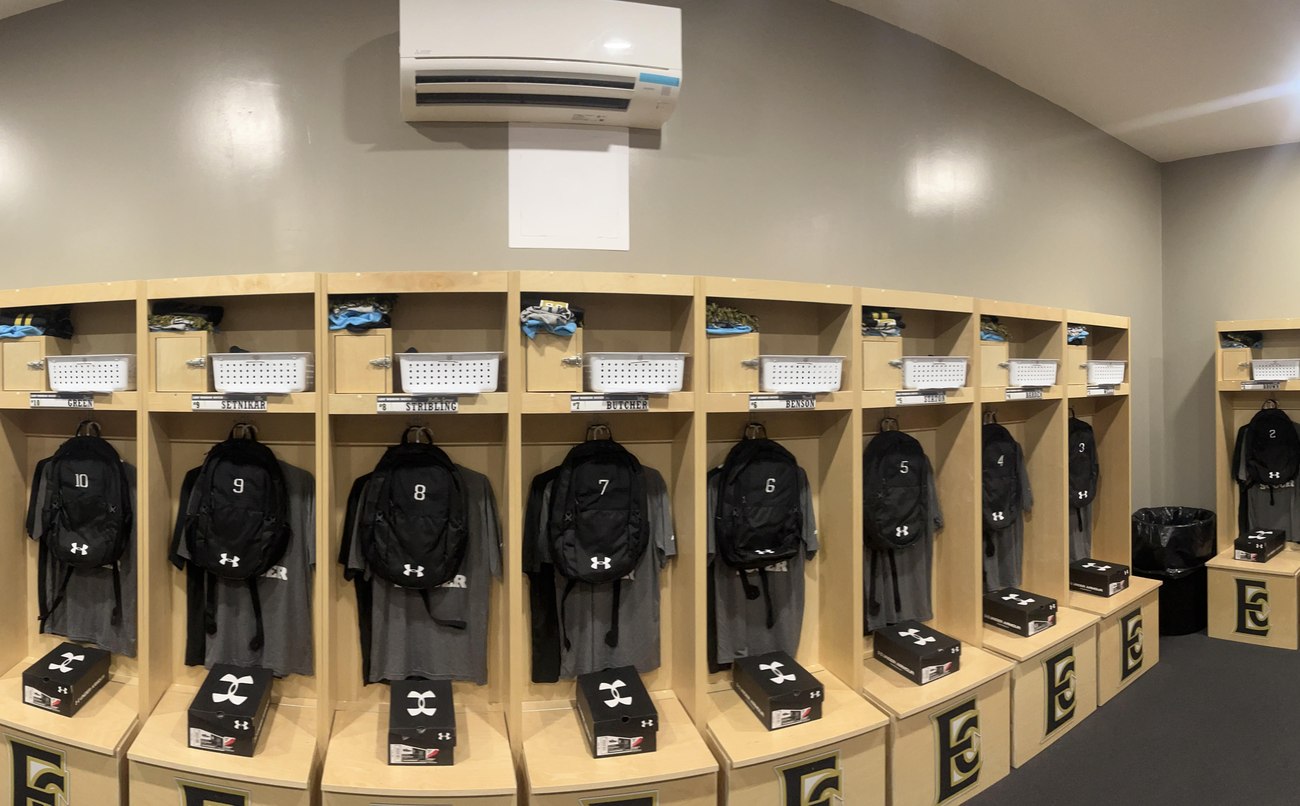
Open fronts, or vented fronts you can see through. Staff resetting a room need to see at a glance whether a stall is empty. Solid doors mean opening thirty of them. Open or ventilated stalls can be cleared visually from the doorway.
Nothing that collects. Deep bins, closed cubbies and fabric anything will accumulate lost gear, tape, water bottles and worse. Shallow open shelving empties itself.
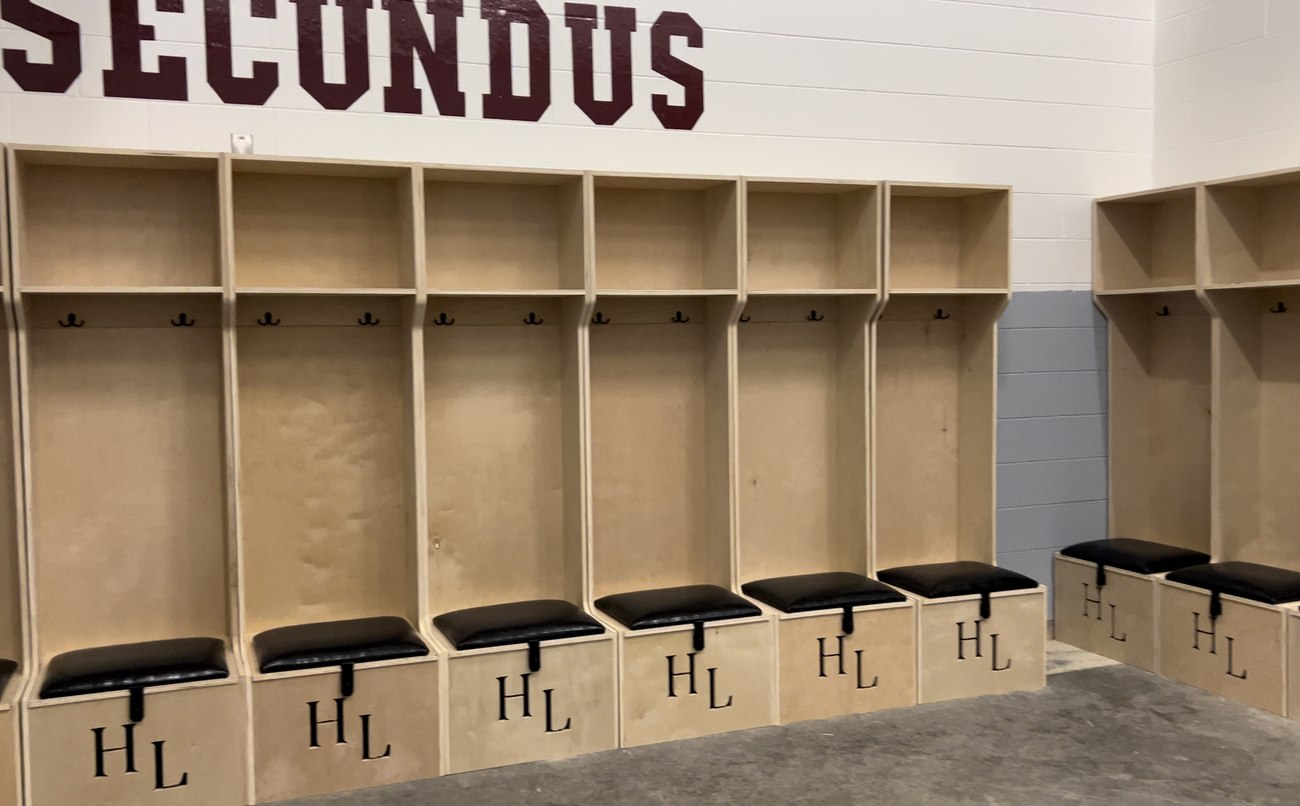
Bench and stall in one unit. A separate bench is one more thing to move, clean around and replace. An integrated seat keeps the floor clear, which is what makes a room fast to mop.
Base clearance. Four inches between the unit and the floor is the single most useful specification in a rink. It lets water reach the drain instead of pooling, and it lets a mop or squeegee pass straight under rather than around thirty obstacles.
Shared Rooms Versus Contracted-User Rooms
Most arenas end up running two tiers of room, and it is worth being deliberate about which is which.
Shared rooms serve drop-in, public skating, minor hockey rotations and casual bookings. Specify these for durability and speed: no name plates, no branding, nothing personalised, nothing to lose. The budget goes into construction and ventilation.
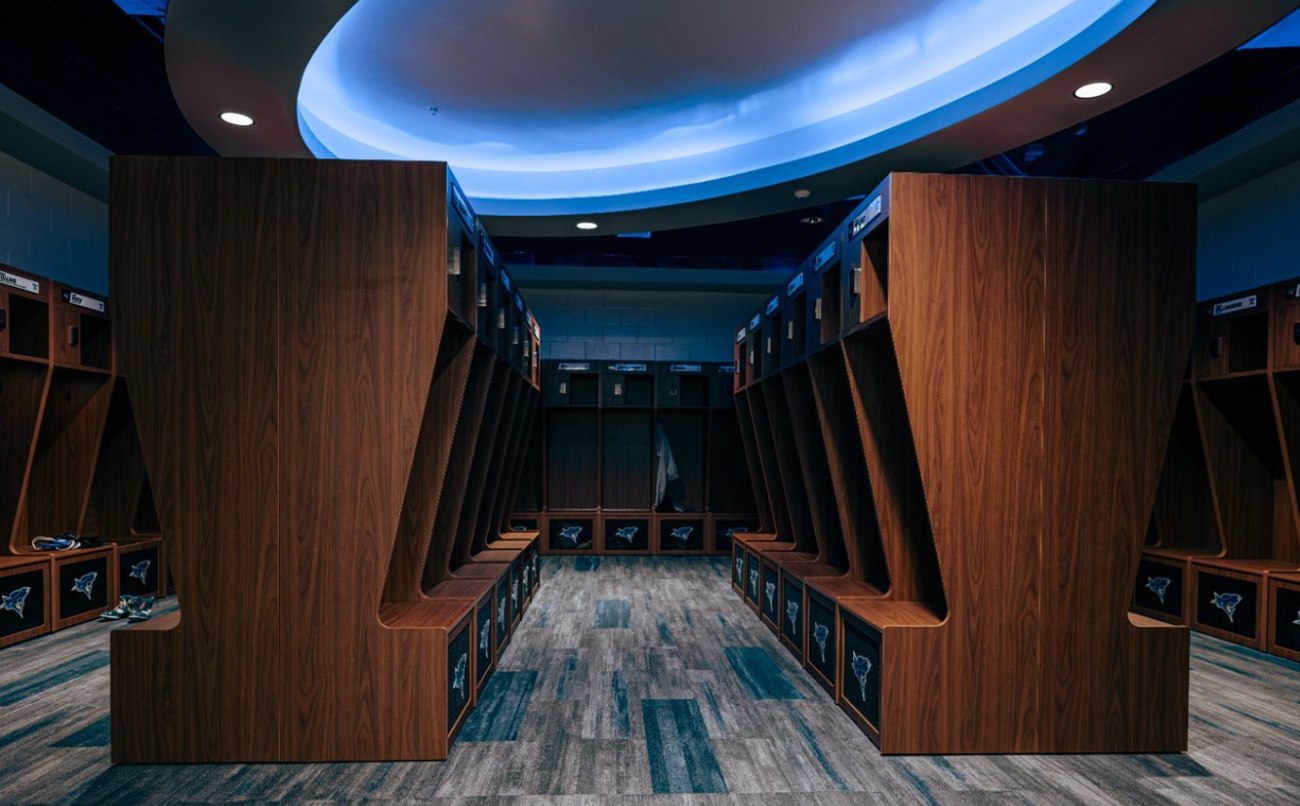
Contracted-user rooms serve the junior team, the academy, the resident programme, anyone paying for exclusive or priority use. This is where personalisation earns its money. Name plates, a logo, a better finish. A contracted user who feels the room is theirs renews, and a room that photographs well is used in their recruiting, which is free marketing for your building.
The mistake is spreading a personalisation budget thinly across every room. One excellent room does more for your bookings than six slightly-nicer ones.
Wet Gear, Drainage and Airflow
You will not keep water out of a change room. Design to move it.
Ventilated fronts on every stall. Airflow is what stops a room smelling, and in a rink the room genuinely never gets long enough to dry on its own. Our vented panels are specified with a high open area precisely for this.
Base clearance to the drain. Water that reaches the floor drain is gone. Water that pools under a unit sits against the base until it evaporates, and takes the finish with it over a few seasons.
A sealed finish that tolerates frequent cleaning. Arena rooms get wiped down far more often than school rooms. Sealed birch takes that routine without degrading. Thin powder coat does not, and that is where the chips start.
Room-level exhaust. Ventilated stalls in an unventilated room just circulate damp air. If your mechanical system was sized for a smaller operation than you now run, fix that before replacing lockers, it is the cheaper half of the job and it determines whether the expensive half works.
For the sport-specific side of this, our hockey locker room setup guide covers gear storage in more detail, and hockey stick racks covers the storage problem that is unique to the sport.
Skate Blades and What They Do to a Locker
Two practical specifications reduce skate damage more than anything else.
Put the skates somewhere deliberate. A grated or slatted base shelf, four inches off the floor, gives skates an obvious home. Gear that has an obvious home mostly ends up there. Gear with no home ends up on the bench, where blades meet seat surfaces.
Skate hooks. A simple, cheap addition at $25 that gets blades off horizontal surfaces entirely, hung by the blade or the boot. In a rink this is not a luxury item, it is damage control. We supply them in black and silver.
For the bench surface itself, a cushion at $75 is replaceable in a way a built-in seat panel is not. In a shared arena room, a wearing part that can be swapped in ten minutes is worth specifying deliberately.
Security in a Room Nobody Owns
Shared rooms have a theft problem that owned rooms largely do not, and operators tend to deal with it by telling users not to bring valuables. That works until it doesn’t.
A half-width lock box inside the stall is the proportionate answer: enough for a phone, a wallet and keys, without surrendering the open ventilated space that wet gear needs. With a digital keypad at $80 per unit, codes can be reset between user groups without recutting hardware or chasing lost keys, which matters enormously in a building where nobody keeps the same stall twice.
Full-width lockable doors are the wrong answer for most rinks. They slow turnover, they hide what is inside, they trap moisture, and in practice they fill with abandoned gear.
What This Costs, Per Locker
We publish prices, which is unusual in this industry and deliberate, operators building a capital case should not have to request a quote to get a number.
- Semi Pro, $399, solid birch, ventilated, sealed finish. The right specification for shared rooms taking heavy rotation.
- Varsity, $499, adds team colours, name plate capability and logo integration. The usual choice for a contracted-user room.
- Stadium, $599, top of the Essential line, for the room you show people.
- Custom models from $649, full control of width, depth, finish and configuration, from 18 to 32 inches.
Options are published too: hooks $15, skate hooks $25, name plate $10, custom logo $75, cushions $75, lock box with digital keypad $80, bench from $225.
Multiply the tier price by the number of stalls in the room, then add freight and installation. Custom builds run 8 to 12 weeks, so a room wanted for a September season should be specified in the spring. Every locker carries a five year guarantee, and we price-match USA competitors, if you have a comparable quote, bring it.
The number worth comparing is not the price per stall but the price per stall per year of service. A unit at $399 that is still working in year twenty costs you $20 a year. A unit at $230 replaced in year six costs you $38 a year before you count the labour of pulling it out and putting another one in, during a week when the ice should have been booked.
Frequently Asked Questions
How are arena change rooms different from a school locker room?
A school room serves one roster that owns the space and gets a quiet summer. An arena room serves a different group every ninety minutes, minor hockey at six, figure skating at eight, adult league at ten, and never gets an off-season. Nobody owns it and nobody is responsible for it. That changes the specification: durability over personalisation, fast visual turnover, and surfaces that survive being cleaned far more often than a school room ever is.
What is the biggest mistake rink operators make with change rooms?
Specifying for the cheapest install rather than the shortest replacement cycle. An arena room takes more abuse in one season than a school room takes in several, between skate blades, standing water and constant turnover. Budget metal that lasts eight years in a school can fail in three in a rink, and a replacement cycle costs you ice time as well as money. The per-locker price that matters is the one divided across the years you actually get.
Do arena change rooms need lockers at all, or just benches?
Many rinks run bench-and-hook rooms, and that is genuinely adequate for drop-in and public skating. It stops being adequate the moment you want contracted users, junior programmes, academies, tournaments, spring leagues. Those groups compare facilities when they choose a home rink, and a room with proper stalls is a direct argument for a higher booking rate.
How do you handle wet gear in a rink change room?
Design for drainage and airflow rather than containment. Ventilated fronts on every stall, four inches of base clearance so water reaches the floor drain instead of pooling under the unit, a sealed finish that takes daily cleaning, and room-level exhaust sized to the building you run now rather than the one you ran ten years ago. Anything that traps moisture against a surface is where both odour and corrosion start.
What does it cost to outfit an arena change room?
Prices are published per locker: Semi Pro $399, Varsity $499, Stadium $599, custom models from $649. Options are published too, hooks $15, skate hooks $25, name plate $10, lock box with digital keypad $80. Multiply the tier price by the stalls per room and add freight and installation. Every locker carries a five year guarantee and we price-match USA competitors.
Can one room serve hockey, figure skating and public skating?
Yes, and most arena rooms have to. Design around hockey, the highest volume and the only user bringing steel into the room, and every lighter user is comfortably served. Keep name plates removable or leave them off entirely in shared rooms, and concentrate the personalisation budget in one contracted-user room where it earns a return.
Conclusion
Arena change rooms fail for reasons that have nothing to do with the sport and everything to do with the building: water that has nowhere to go, blades on surfaces that were never meant to take them, and a schedule that never allows the room to recover. Those are design problems, and they have design answers, ventilated fronts, base clearance to the drain, a finish that survives frequent cleaning, skates given a deliberate home, and a wearing surface that can be replaced rather than endured.
Get those right and the room stops being the thing you apologise for when a programme tours the building. It becomes a reason they book it.
We have built wood athletic lockers for over 35 years, every one with a five year guarantee. We publish our prices, we price-match USA competitors, and we will tell you honestly what your room needs before you spend anything. Contact us for a free design consultation, send your room dimensions, your stall count and your busiest booking day.
Explore related guides: hockey locker room setup | hockey stick racks | wood versus metal lockers | all products