Wrestling Locker Room Build: 102 Lockers at Iowa Western
Wrestling Locker Room Build: 102 Custom Wood Lockers at Iowa Western Community College
Most locker room articles are theory. This one is a build. In August 2026 we delivered 102 custom wood wrestling lockers to the Reiver Athletic Performance Center at Iowa Western Community College in Council Bluffs, Iowa, outfitting the men’s and women’s wrestling programs in a single project. This is the full account, what the program asked for, what we specified and why, how the bid and the freight actually went, and the decisions we would repeat on the next wrestling room.
Wrestling is one of the largest sports in American high school and college athletics and one of the worst served by locker room design. The NFHS 2024-25 participation survey counted 300,214 boys wrestling in US high schools, the sixth most popular boys program in the country. Girls wrestling reached 74,064 participants at 8,100 schools, up 15 percent in a single year, from just 11,496 a decade ago. That is an enormous and fast-growing athlete population, and most of them are changing in rooms designed around football equipment.
Iowa Western decided not to inherit that problem. Here is how the room came together.
Key Takeaways
- Iowa Western outfitted men’s and women’s wrestling in one order, 102 lockers, two widths, matched finish and hardware throughout.
- Vented metal fronts, not solid doors, were the defining specification. Wrestling’s hygiene problem is a moisture problem, and moisture is solved with airflow.
- The lockers were built taller and deeper than a standard athletic locker, 84 inches tall and about 23 inches deep, because the room doubles as the team’s daily base, not just gear storage.
- A half-width lock box secures valuables without sacrificing the open, ventilated space wrestling gear needs to dry.
- The project cleared a competitive public bid, was approved in early June, and landed on the dock on 24 August, roughly eleven weeks, ahead of the fall semester.
In This Guide
- The program and what it needed
- Going through a competitive bid
- The specification, decision by decision
- Width: why 24 inches and 18 inches
- Height and depth: building past the standard
- Ventilation: the choice that matters most
- Security: half-width lock boxes
- Branding: logos, name plates, and two programs in one room
- Lighting and hooks
- Freight: moving 102 lockers to Iowa
- What we would do again
The Program and What It Needed
Iowa Western is an NJCAA program in Council Bluffs, on the Iowa side of the Omaha metro. Junior college wrestling occupies a specific and demanding niche: rosters are large, turnover is annual by definition, and the program competes for recruits against four-year schools with far deeper facility budgets. The locker room is one of the few places a two-year college can go toe to toe with a Division I visit.
The ask came from the coaching staff rather than a facilities office, which tells you something about priorities. Coaches who spend every day in a room know exactly what is wrong with it. The requirements were specific: enough lockers for both the men’s and the women’s roster, gear that would actually dry between sessions, secure storage for phones and wallets, and a room that would look like a serious program to a seventeen-year-old on a recruiting visit.
That last point is not vanity. For a JUCO program, the locker room is a recruiting instrument. We have written before about how locker rooms influence recruiting decisions, and nowhere is the effect sharper than at schools that cannot compete on stadium size or television exposure.
Two Programs, One Project
The decision that shaped everything else was to outfit both programs at once. Women’s wrestling is the fastest-growing wrestling category in the United States, and programs adding it often bolt a few mismatched lockers onto an existing room. Iowa Western instead specified both rooms in a single order, with identical finish, hardware, and ventilation, differing only in locker width and name plate size.
This is both better and cheaper. One production run, one freight shipment, one set of tooling for the logo and trim. Two separate projects a year apart would have cost more per locker and would almost certainly not have matched. If your program is adding women’s wrestling in the next two or three years, specify it now even if you phase the install.
Going Through a Competitive Bid
This was a public procurement. The project exceeded the institution’s $25,000 threshold, which put it out to competitive bid rather than a direct purchase.
We quoted in mid-May, revised the quote a week later after a call with the coaching staff, and won the bid at the start of June. The purchase order followed within days.
A few things make the difference in a bid like this, and they are worth knowing whether you are buying or selling.
Specify in writing what you actually need, not a product name. The strongest bid packages we see describe performance requirements, minimum ventilation area, finish durability, warranty term, delivery window, rather than copying a competitor’s model number. A specification built around one manufacturer’s catalogue entry either locks you into that manufacturer or produces bids that are impossible to compare.
Ask for the warranty in the bid documents. Locker warranties in this industry range from one year to lifetime, and the price difference between them is usually smaller than people assume. If warranty term is not in the evaluation criteria, you will get bids built to the cheapest possible standard.
Make freight and installation explicit. On a 100-locker order shipping across a border, freight, duty, and brokerage are not rounding errors. A bid that excludes them is not comparable to one that includes them. We quote them as separate, visible lines for exactly this reason.
If you are assembling a bid package now, our locker room renovation RFP guide walks through the specification language in detail, and the athletic director’s guide to locker room lockers covers the evaluation side.
The Specification, Decision by Decision
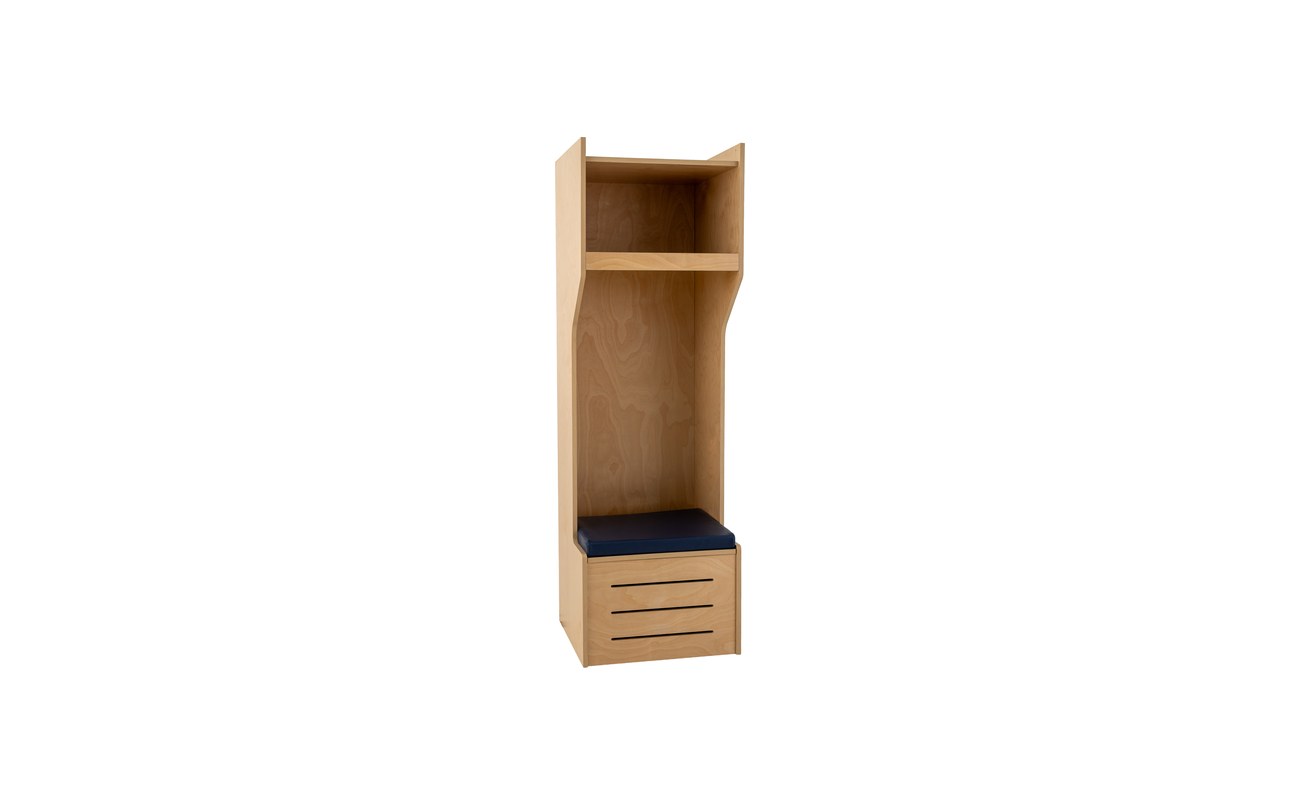
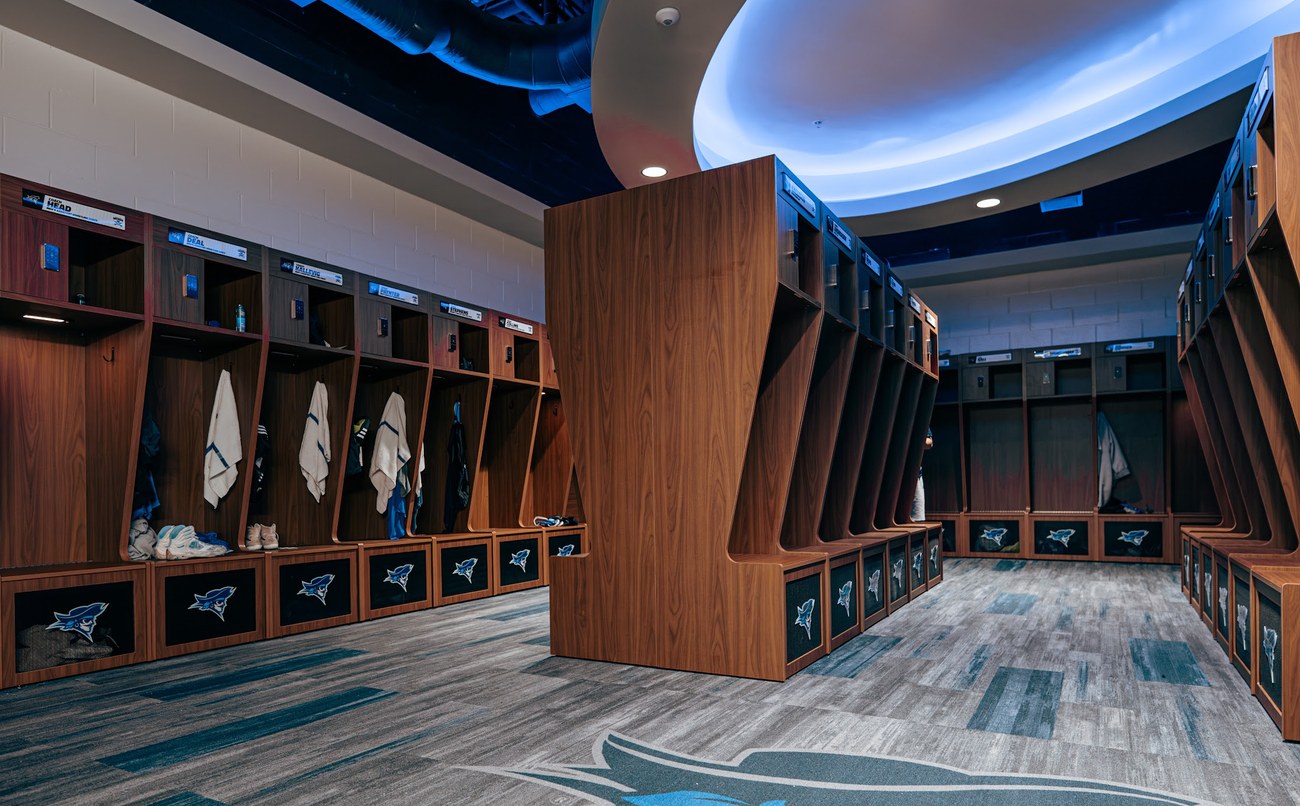
Iowa Western’s lockers are Model Z in a dark brown finish. Here is the full build and the reasoning behind each choice.
| Element | Specification |
|---|---|
| Quantity | 102, 62 at 24″ wide, 40 at 18″ wide |
| Height | 84″ (2,134 mm) |
| Depth | 23–23.5″ (584–597 mm) |
| Seat height | 16″ (406 mm) |
| Front panel | Black perforated metal, vented |
| Lock box | Half width, 12″ in the 24″ lockers, 9″ in the 18″ |
| Logo | 10″ × 7″, 3 mm raised |
| Name plate frame | Black, in extra top trim, 16″ × 3″ men’s, 14″ × 3″ women’s |
| Hooks | 4 black per locker, one double centre, two singles |
| Lighting | Battery light in the open cubby |
Width: Why 24 Inches and 18 Inches
Wrestling gear is the most compact equipment set in team sports. A singlet weighs ounces. Headgear folds flat. Knee pads stack. On gear volume alone, 18 inches is plenty, and that is the width we recommend for a room that is purely gear storage.
Iowa Western’s main run is 24 inches, and that was deliberate. The program wanted the locker room to function as the team’s daily base, athletes arriving from class, changing for lifting, changing again for practice, showering, and leaving in street clothes. That is three sets of clothing plus a travel bag in circulation at once, and 18 inches does not hold it without everything being crushed together. Crushed gear does not dry, and gear that does not dry is the whole problem.
The 40 lockers at 18 inches serve the second program, where the roster size and the equipment load made the narrower width the right call. The two widths sit in the same room with the same trim line, the same finish, and the same hardware, so the step from 24 to 18 reads as design rather than compromise.
The lesson generalises: size the locker to what happens in the room, not to the sport’s gear list. A room athletes pass through needs less than a room they live in.
Height and Depth: Building Past the Standard
Most athletic lockers are 72 or 76 inches tall. Iowa Western’s are 84 inches, a full foot taller than the low end of the standard.
The extra height buys a genuinely useful zone above the hanging space: travel bags, backup shoes, competition singlets kept separate from practice gear, and the clutter that otherwise ends up on the floor. Floor clutter in a wrestling room is not a tidiness issue. It blocks the airflow at the base of the locker that dries everything else.
Depth went to roughly 23 inches, against a more typical 18 to 20. Depth is what lets a jacket or a weight-room hoodie hang without pressing against the back panel, and a garment pressed flat against a panel dries on one side only.
Both decisions cost more. Taller and deeper means more material per locker and fewer lockers per container. On a room meant to last twenty to thirty years, the increment is small against the daily benefit, and it is the kind of choice that is impossible to revisit later.
The 16-Inch Seat
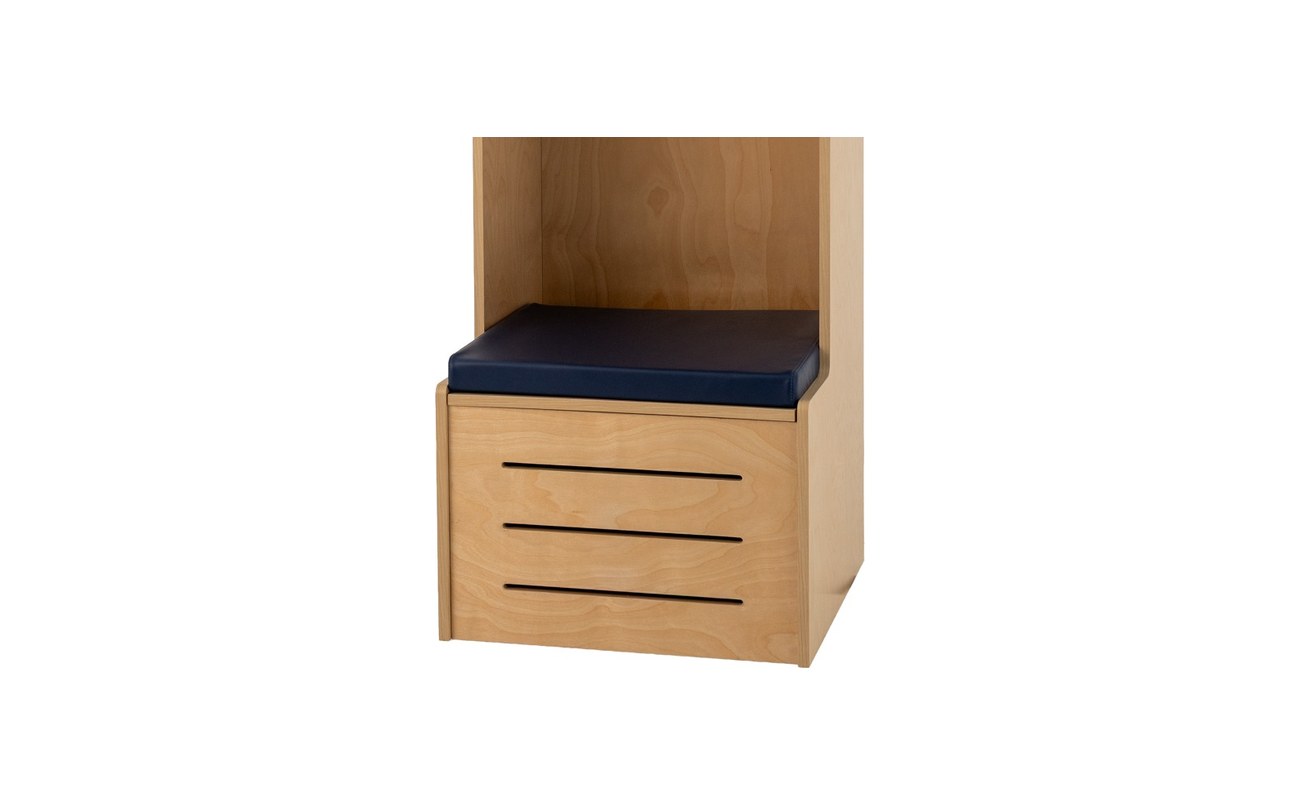
The seat sits at 16 inches, which is standard chair height and not an accident. Wrestlers spend real time at their lockers taping, lacing, and cutting weight. A seat at 14 inches forces a crouch; at 18 it dangles the feet of shorter athletes. Sixteen works for the full range of bodies on a wrestling roster, which spans more size variation than almost any other sport.
Ventilation: The Choice That Matters Most
If you take one thing from this build, take this: the front panel is the most consequential decision in a wrestling locker room.
Wrestling practice runs 90 to 120 minutes at high intensity in a deliberately warm room. Athletes finish soaked. Their gear is thin, absorbent, and worn directly against the skin, there is no outer shell to wick moisture the way football pads do. Every piece of it has to dry completely before the next session, and a sealed locker guarantees that it will not.
That is why wrestling carries one of the highest rates of skin infection in school athletics. Ringworm, impetigo, and MRSA are well-documented concerns in the sport, and the CDC’s guidance on hygiene and skin infections in athletics treats equipment drying and surface cleaning as primary controls. Locker design is one of the few variables a program fully controls.
Iowa Western specified black perforated metal fronts. Metal perforation moves substantially more air than a slatted wood door, because the open area can be much higher without weakening the panel. It also takes daily abuse, a wrestling room door gets kicked, leaned on, and slammed, without the splitting a thin wood slat eventually shows.
Three elements have to work together for ventilation to actually function:
Vented fronts on every locker, with a high open-face area. This is the locker’s own contribution.
Base clearance so air moves underneath. Standing moisture at floor level is where most chronic locker room problems start, and a sealed-to-the-floor locker traps it permanently.
Room-level exhaust sized to the space. Ventilated lockers in an unventilated room just redistribute humid air. If the room does not already exchange air properly, fix that before the lockers arrive, it is the cheaper half of the job and it determines whether the expensive half works.
For the full treatment of the hygiene side, see our wrestling locker room design guide.
Security: Half-Width Lock Boxes
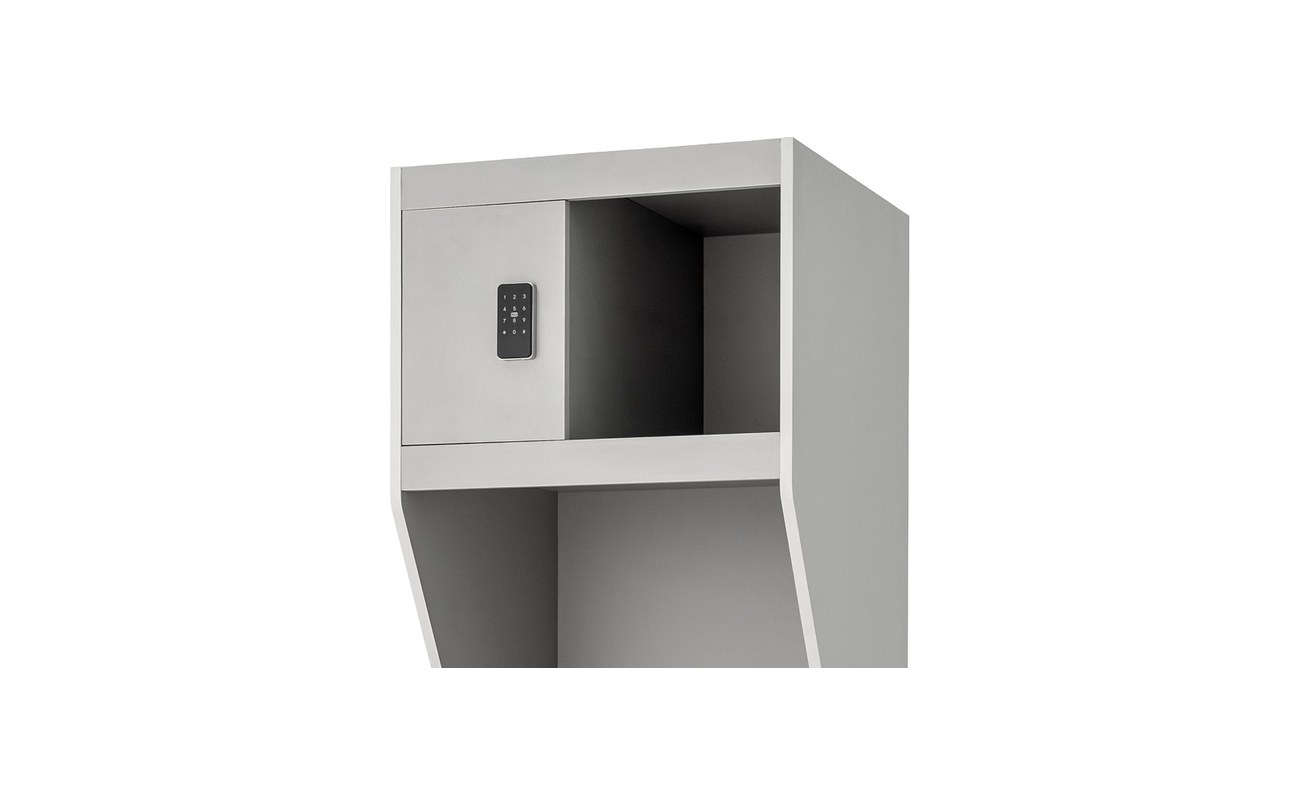
Every Iowa Western locker has a lock box, and every one is half width, 12 inches in the 24-inch lockers, 9 inches in the 18-inch.
Half width is the configuration we recommend for wrestling, and the reason is airflow again. A full-width lock box is a sealed box spanning the locker, and it takes away exactly the open, ventilated shelf space the sport needs. Half width secures a phone, a wallet, keys, and a watch, which is all anyone actually needs locked, while leaving open shelf beside it for gear that has to breathe.
A digital keypad lock box is an $80 option on our lockers and ships with its own setup guide. For a wrestling program the practical advantage over a padlock is that there is no key or combination to lose on a travel weekend, and codes can be reassigned when the roster turns over without recutting anything.
Branding: Logos, Name Plates, and Two Programs in One Room
Each locker carries a 10 by 7 inch raised logo, 3 mm thick. Raised rather than printed matters more than it sounds: a printed or vinyl logo on a surface that gets wiped with disinfectant weekly will not survive twenty years, and wrestling rooms get cleaned harder than most.
The name plates sit in a black frame built into an extra top trim piece, 16 by 3 inches on the men’s lockers, 14 by 3 on the women’s, matched to each width. Framed plates slide in and out, which is the only sane choice for a JUCO roster that turns over substantially every year. Engraved or screwed-in plates mean either damaging the locker or living with a wrong name.
This is where outfitting both programs together paid off visually. Same logo treatment, same trim line, same frame style, two plate sizes. The women’s room does not read as an afterthought, because it was not one.
Logos are a $75 option and name plates $10. We publish those prices rather than quoting branding as a bespoke line, because branding is the part programs most often cut when they cannot see what it costs, and it is the part athletes notice first.
Lighting and Hooks
Each locker has a battery-powered light in the open cubby. Battery rather than wired was the right call for a retrofit into an existing room: no electrical work, no conduit, no inspection, and each unit is independently serviceable. In a deep 23-inch locker, the back of the cubby is genuinely dark, and a light turns the top section from dead space into usable storage.
Hooks are four per locker in black, one double hook at the centre and two singles. The double at centre takes the heavy load, a bag or a jacket. The singles take headgear and a towel. Four is the number we have landed on for wrestling after years of builds: fewer and gear ends up piled on the seat, more and athletes hang wet items touching each other, which defeats the drying the vented front is there to provide.
Hooks are $15. Skate hooks, for the hockey programs that ask, are $25.
Freight: Moving 102 Lockers to Iowa
Logistics on an order this size are a real part of the project, and vendors who gloss over them are doing buyers a disservice.
The shipment went out on 20 August 2026: six pallets, 16,535 lb (7,500 kg), full truckload with marine insurance covering the full value of the goods. It arrived at the Reiver Athletic Performance Center on 24 August, a dock-and-forklift delivery, which is what you want for a shipment of this weight.
Two practical notes for anyone planning a large locker delivery:
Confirm your receiving capability before you order. A dock and a forklift make a 102-locker delivery straightforward. Without them you need a liftgate and a much longer unload, and that changes the freight quote. We ask about this during quoting rather than on delivery day.
Get the duty and brokerage quoted up front. On a cross-border order these are substantial and they are not optional. We had them quoted, entered, and paid before the truck moved. A competing freight quote on this shipment came in at roughly twice what we paid, which is a reminder that freight is worth shopping as hard as the product.
Spares Shipped With the Order
We shipped four extra lockers free with this order, two in each width. That is our standing practice on custom orders: warranty spares travel with the original run.
The reason is practical. Two years into a twenty-year life, if a locker is damaged, matching a custom finish, a custom trim profile, and a custom logo from a fresh production run is difficult and slow. A spare built in the same run, from the same material, is identical. Programs that skip spares to save a few hundred dollars generally regret it the first time something gets broken.
Alongside the lockers the program received model-specific illustrated assembly instructions and, separately, the setup guide for the digital lock app.
What We Would Do Again
Looking back at this build, five decisions stand out as right and worth repeating.
Vented metal fronts. Non-negotiable for wrestling. The hygiene case is overwhelming and the durability case is strong on its own.
Half-width lock boxes. Security without surrendering ventilated shelf space. We now recommend this configuration by default for wrestling and would push back on a full-width request.
Both programs in one order. Better pricing, guaranteed match, one logistics event. Any program with women’s wrestling on the horizon should specify it now.
Taller and deeper than standard. 84 inches and 23 inches of depth cost more up front and cannot be added later. On a room with a twenty-year life, it was the easy call.
Spares in the original run. Cheap insurance against an expensive mismatch.
And one thing we would do differently: lock the receiving details earlier. Dock access, forklift availability, and the delivery window are worth confirming at quote time rather than in the final fortnight, because they genuinely affect the freight number.
Frequently Asked Questions
How many lockers does a college wrestling program need?
Plan one locker per roster athlete plus roughly 15 percent for redshirts, walk-ons, and mid-season additions. Iowa Western ordered 102 across two programs, 62 at 24 inches and 40 at 18 inches. Wrestling rosters churn more than most sports, so building spare capacity in from the start is cheaper than adding a short run two years later, when matching a custom finish, trim profile, and logo becomes the difficult part. If your roster is 30, order for 35.
What size locker is right for wrestling?
Wrestling gear is compact, so width matters less than ventilation. An 18-inch locker holds a singlet, headgear, knee pads, and shoes comfortably, and that is the right width for a room that is purely gear storage. We built Iowa Western’s main run at 24 inches because the room functions as the team’s daily base, with street clothes, lifting clothes, and practice gear all in circulation. Size the locker to what happens in the room, not to the sport’s gear list.
Should wrestling lockers have vented fronts?
Yes, and it is the most important decision in the room. Wrestling generates more per-athlete moisture than almost any sport, and trapped moisture drives the skin-infection problems the sport is known for. Iowa Western’s lockers use black perforated metal fronts, which move more air than a slatted wood door and survive daily contact better. Pair vented fronts with base clearance underneath and a properly sized room exhaust, all three have to work together or none of them do.
How long does a 100-locker wrestling installation take?
Budget 10 to 12 weeks from approved quote to delivered product for a custom build of this size. Iowa Western approved in early June and the lockers were on the dock on 24 August, roughly eleven weeks, timed to land before the fall semester. Add your bid or purchase-order window ahead of that. If you want lockers in place for a September start, begin the conversation in April rather than July.
What does a 100-locker wrestling room cost?
Our pricing is published rather than quote-only. The Essential line is $399 for Semi Pro, $499 for Varsity, and $599 for Stadium; custom models including Model Z start at $649. The locker line of your budget is simply the tier price times your roster, before options, freight and duty. Options are priced openly as well, custom logo $75, name plate $10, hooks $15, digital keypad lock box $80, cushions $75. We also price-match USA competitors, so a lower comparable quote is worth bringing to us.
Do custom wrestling lockers come with digital locks?
They can. Iowa Western specified a half-width digital lock box in every locker, securing valuables while preserving open ventilated storage. The keypad lock box is an $80 option and includes a written app setup guide. For wrestling specifically we recommend half width over full width: a full-width box consumes the shelf space the sport needs for drying gear, and codes can be reassigned at roster turnover without recutting hardware.
Can one order cover both a men’s and a women’s wrestling program?
Yes, and increasingly it should. Girls and women’s wrestling is the fastest-growing wrestling category in the country, 74,064 high school participants at 8,100 schools, up 15 percent in a year. Iowa Western outfitted both programs in one order using two widths and two name plate sizes while keeping finish, hardware, and ventilation identical. One production run and one shipment costs meaningfully less per locker than two projects, and it guarantees the two rooms match. See our guide to designing lockers for female athletes for more.
Conclusion
Iowa Western’s wrestling room works because the program made specific decisions instead of accepting defaults. Vented metal fronts because wrestling is a moisture sport. Half-width lock boxes because security should not cost airflow. Eighty-four inches tall and twenty-three deep because the room is where the team lives, not just where gear waits. Two programs in one order because the women’s room deserved to match.
None of that required an unusual budget. It required knowing what the sport actually needs and specifying it before the bid went out.
We have been building wood athletic lockers for over 35 years, every one with a five year guarantee, and we publish our prices and price-match USA competitors because buyers in this category deserve to compare like with like. If you are planning a wrestling room, one program or two, thirty lockers or a hundred, contact us for a free design consultation. We will work from your room dimensions, your roster, and your budget, and tell you plainly what we would specify and why.
Explore related guides: wrestling locker room design | complete sports lockers buyer’s guide | locker room RFP guide | designing for female athletes | all products