Sports Lockers: The Complete 2026 Buyer's Guide for Athletic Directors
Sports Lockers: The Complete 2026 Buyer’s Guide for Athletic Directors
The locker room is the first thing a recruit sees and the last thing they remember. It signals what your program thinks of its athletes. And yet most athletic directors approach sports locker purchases with the same urgency they apply to ordering pencils, lowest bid, fastest delivery, done. That approach costs programs more money over time and costs them recruits they’ll never get back.
This guide exists because buying sports lockers is more complicated than it looks. Material choices determine whether you’re replacing everything in eight years or still using the same installation in 2046. Sizing decisions affect how well athletes can actually use their space. Ventilation, the factor most buyers ignore until black mold appears behind a jersey, determines whether your locker room is a health asset or a liability. And vendor selection separates programs that get what they paid for from those who discover the difference between a warranty on paper and a vendor who honours it.
We’ve been building custom wood sports lockers for over 35 years. We’ve seen every mistake made and every shortcut taken. This guide covers every decision you’ll face, in the order you’ll face it.
Key Takeaways
- Solid wood construction outlasts metal and particleboard by 10–20 years and delivers a lower total cost of ownership over a 20-year horizon.
- Locker width varies significantly by sport, getting sizing right before ordering is non-negotiable.
- Ventilation is the most commonly ignored specification and the most expensive mistake to correct after installation.
- ADA compliance requirements apply to every locker room project and must be designed in from the start, not bolted on at the end.
- The 10–16 week lead time means most programs should be planning now for fall installations.
- A warranty’s length matters less than what it actually covers, ask every vendor to define precisely what is included and what is excluded.
In This Guide
- What makes sports lockers different from standard lockers
- The material decision: wood vs. metal vs. particleboard
- Sizing by sport: football, hockey, basketball, baseball, soccer, wrestling
- Ventilation: the specification most buyers ignore
- Customisation that drives recruiting value
- ADA compliance requirements
- 10 questions to ask every vendor
- The buying process: from consultation to installation
- Total cost of ownership over 20 years
- Budget by program type
- Why PlayerStall
What Makes Sports Lockers Different From Standard Lockers
A standard school locker is 12 inches wide, 6 feet tall, and designed to hold a backpack, a coat, and a pair of shoes. It is not designed for athletic equipment. It is not designed for daily exposure to moisture, sweat, and abrasive gear. And it is absolutely not designed to serve as the physical and psychological anchor of an athletic program.
Sports lockers, true athletic lockers built for competitive programs, are different in three fundamental ways.
Athlete-Grade Construction
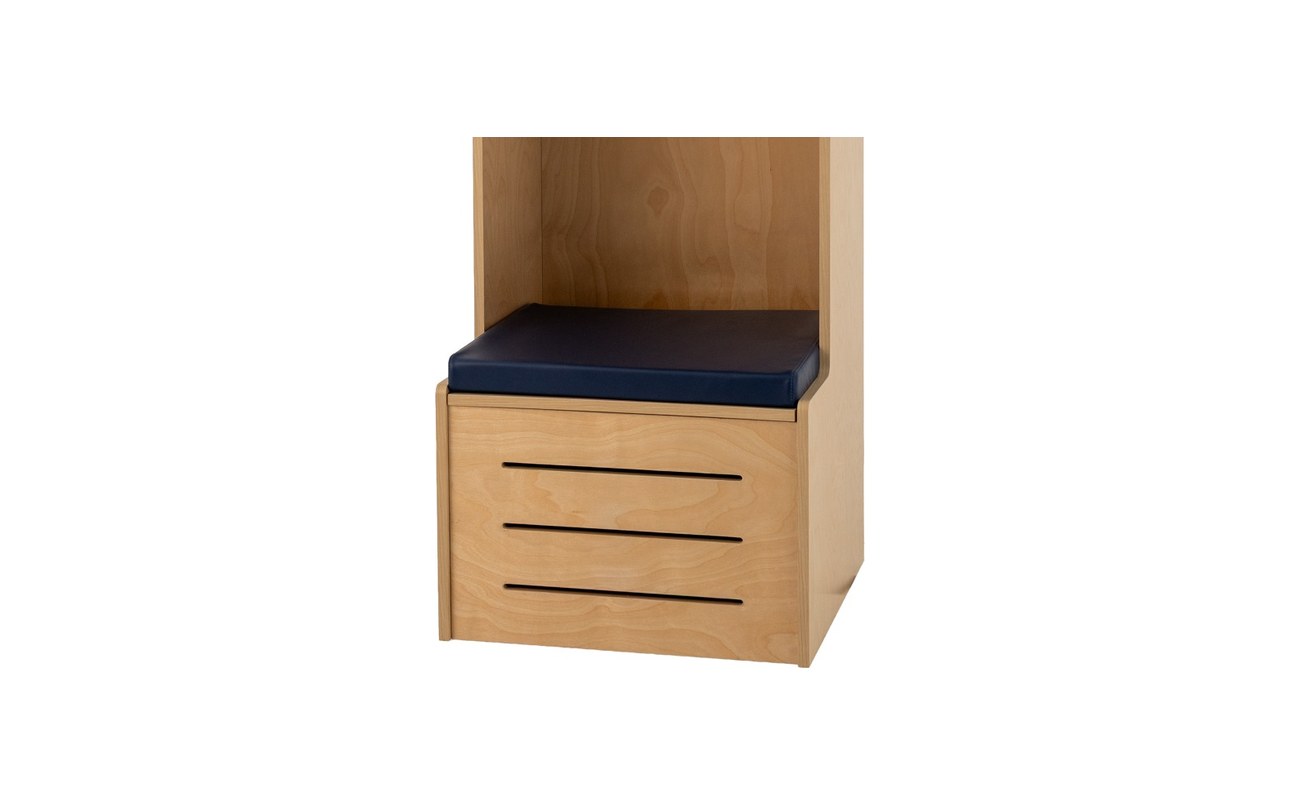
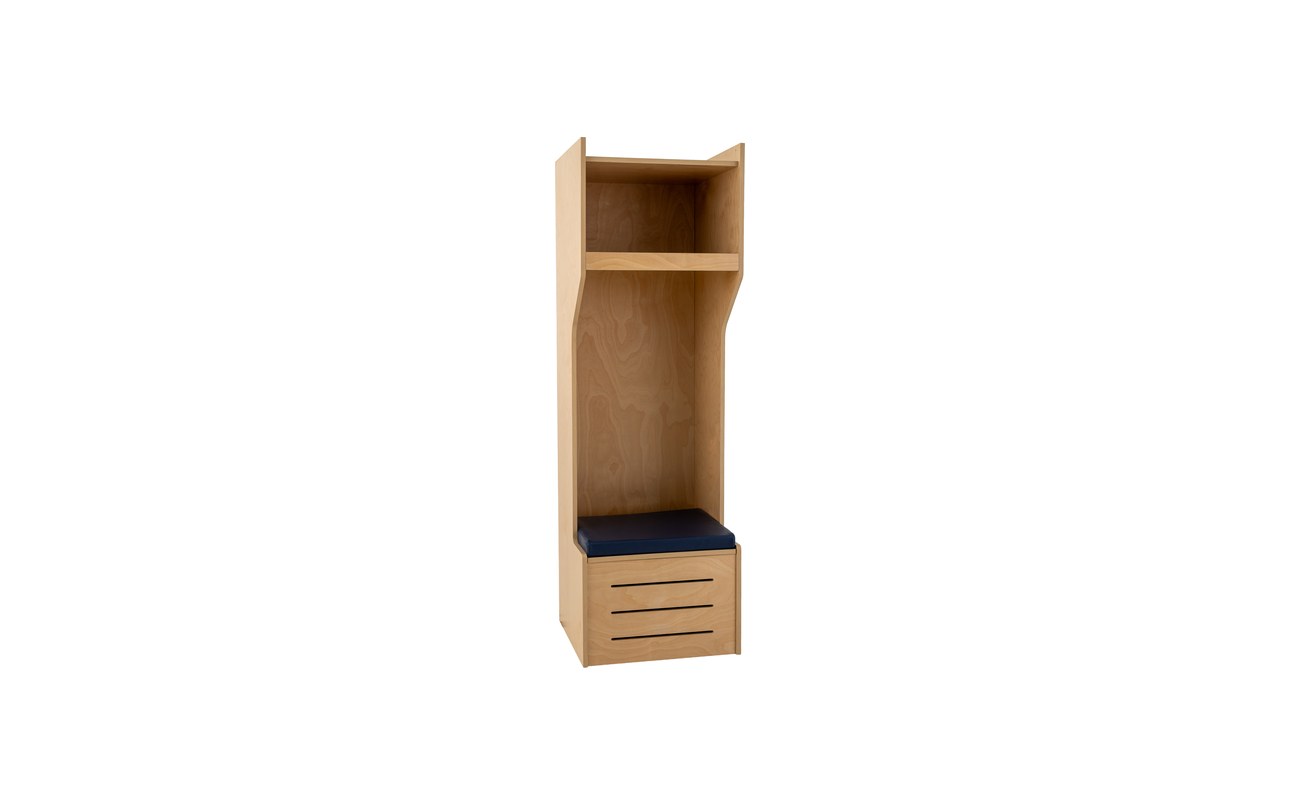
The frame, shelving, and door of a sports locker take real punishment. Football shoulder pads get thrown in after a three-hour practice. Wet hockey equipment goes straight in at 11 PM after a road game. Cleats hit every surface on the way in and out. A standard school locker fails under that use pattern within two or three seasons. Purpose-built wood athletic lockers, constructed from solid 3/4-inch birch, absorb that abuse without warping, cracking, or losing structural integrity.
Think of it this way: a school locker is a studio apartment. A sports locker is a utility room built to handle real work.
Ventilation Designed for Moisture
Athlete sweat is relentless. A single football practice generates enough moisture per player to literally wilt paper. Compressed into a locker with no airflow, that moisture breeds mold and bacteria within days. Purpose-built sports lockers incorporate ventilated doors, slatted or perforated panels that allow continuous airflow, as a core design element, not an afterthought.
Customisation for Program Identity
Wood athletic lockers can be built to match your exact team colors, finished with your program’s name and logo, equipped with individual nameplates, and configured to reflect the status your athletes have earned. Metal lockers in institutional gray cannot do that. Customisation is not decoration, it’s a recruiting and retention tool that works every day your locker room is open.
The Material Decision: Wood vs. Metal vs. Particleboard
This decision determines your total cost of ownership more than any other factor. Get it wrong and you’ll be replacing lockers before your current recruits graduate.
Solid Wood: The Long-Term Standard
Solid 3/4-inch birch is the construction standard for premium wood sports lockers. Birch is dimensionally stable, takes finish exceptionally well, and resists the warping and swelling that damages lesser materials in high-humidity athletic environments. It machines cleanly, which allows tight joinery and precise door fitting. And it is repairable, a scratched or dented panel can be sanded and refinished; a dented metal door cannot.
PlayerStall uses solid birch throughout, not plywood, not MDF, not particleboard with a birch veneer. The difference is structural, not cosmetic.
Metal: The Middle Option
Metal lockers, particularly steel, are durable in their own right. They resist impact damage better than wood in some configurations and require no finishing maintenance. The problems are corrosion and customisation. Steel lockers in humid athletic environments rust at welds and joints within 5–8 years even with quality paint. Powder-coat finishes chip and expose bare metal. And metal lockers offer almost no customisation, you can apply a decal, but you can’t build team identity into the structure itself.
Budget metal lockers, the thin-gauge variety, are worse on every metric. The gauge is too light to handle daily athletic use. The hardware fails within two or three seasons. And the warranty, if one exists, is typically limited to 1–5 years and full of exclusions.
Particleboard and Laminate: Avoid Entirely
Particleboard with laminate facing is the cheapest option and the most expensive long-term mistake. Particleboard is moisture-intolerant by nature. The wood fiber core absorbs water and swells, delaminating the face and causing joints to fail. In an athletic locker room, an environment defined by moisture, particleboard lockers typically begin showing failure within 3–5 years and need full replacement within 8 years.
We’ve bid against particleboard alternatives dozens of times. The price difference looks significant upfront. Over 20 years, programs that chose particleboard have spent 40–60% more than those who invested in solid wood from the start.
20-Year Cost Comparison
| Material | Price per locker | Replacement cycles (20 yrs) | 20-year cost per locker |
|---|---|---|---|
| Solid wood (PlayerStall Varsity) | $499 | 0 | $499 |
| Quality metal | $350 | 1 (year 12) | $700 |
| Budget metal | $230 | 2 (years 8, 16) | $690 |
| Particleboard/laminate | $175 | 2 (years 7, 15) | $525+ |
Numbers above are representative estimates for a 50-locker installation. Your specific figures will vary by program size and customisation level.
Sizing by Sport: Getting the Dimensions Right
Locker sizing is where most generic buying guides fail you. “Standard” sizes don’t exist in athletics, every sport has different equipment volumes, and ordering the wrong size means athletes are either cramped or wasting space that could have served more players.
Football: 24–30 Inches Wide
Football equipment is the most voluminous in high school and collegiate athletics. A single player’s game-day setup includes a helmet, shoulder pads, girdle, pants, multiple jersey sets, cleats, turf shoes, gloves, and personal gear. A 24-inch locker is the minimum for a functional football setup. Programs with larger rosters or higher equipment standards typically specify 27–30 inches. Depth of 21–24 inches accommodates shoulder pads properly without forcing them in at an angle that damages them.
Hockey: 30 Inches and Wider
Hockey equipment, particularly goalie gear, is the single largest per-player equipment footprint in athletics. Shoulder pads, chest protectors, leg pads, skates, helmets, and stick storage all need to coexist. Standard hockey lockers run 30–36 inches wide and 24 inches deep. Some programs specify separate skate drying shelves or heated base units. If your program has goalies, design for their equipment and everything else fits easily.
Basketball, Soccer, Volleyball: 18–24 Inches
Basketball and soccer equipment is relatively compact compared to contact sports. A 18–20 inch locker handles game and practice gear comfortably for most players. The focus shifts from volume to organisation, multiple jersey sets, shoes, and personal items need clear, accessible zones rather than raw cubic footage.
Baseball: 24–27 Inches With Bat Storage
Baseball lockers have a specific requirement that most generic guides miss: bat storage. A college baseball player may carry 6–10 wood bats. A dedicated vertical bat column, built into the locker design, is the single most sport-specific feature in a baseball locker room. Bat columns should run full-height with rubber or non-marring bases that protect the bat end.
Wrestling: 18 Inches Is Sufficient, Ventilation Is Not
Wrestling equipment is compact: singlets, compression shorts, headgear, knee pads, shoes. An 18-inch locker provides adequate storage. But wrestling is a high-sweat, high-contact sport with significant skin infection concerns. Ventilation in wrestling lockers isn’t optional, it’s a hygiene requirement. Slatted doors with maximum airflow should be specified for any wrestling installation.
Ventilation: The Specification Most Buyers Ignore
Ventilation is the most commonly underspecified element in locker room design. It gets a line in the spec sheet and almost no thought beyond that.
Here’s what happens when ventilation fails: wet practice gear sits in a closed locker overnight. The moisture has nowhere to go. Bacteria colonise the damp fabric within hours. Within days, the locker smells. Within weeks, mold appears on the wood or metal surfaces. Within months, you have a chronic air quality problem in a facility where athletes breathe deeply for hours every day. We’ve walked into locker rooms where this progression was advanced and obvious, the smell hits you at the door.
Ventilated Doors: The Baseline Requirement
Every sports locker should have a ventilated door, slatted, louvered, or perforated, that allows continuous passive airflow. This is not a premium upgrade. It is the baseline specification for any locker in contact with athletic equipment.
Locker Room HVAC
Individual locker ventilation works best when paired with a room-level HVAC system that exhausts humid air from the space. The combination of ventilated locker doors and a properly sized exhaust system creates a continuous airflow loop that keeps individual lockers dry between uses. If your facility HVAC is undersized for the locker room, fix that before investing in new lockers.
Elevated Bottom Shelves
Moisture accumulates at the base of lockers, where wet cleats, soaked padding, and damp towels end up. Specifying an elevated bottom shelf (4–6 inches off the floor) with an open space below it allows airflow to reach the bottom of the locker and prevents moisture pooling.
Customisation That Drives Real Recruiting Value
Custom wood sports lockers are not just storage. They are the physical manifestation of program identity, and recruits read that identity clearly the moment they walk in.
Team Colors and Finish
Solid wood takes stain and paint finishes exceptionally well. Your lockers can be stained to match your facility palette, painted in exact team colors with interior accent colors, or left in a natural wood finish that projects a premium aesthetic. The flexibility is total. Metal lockers offer powder-coat color options, but the palette is limited and the finish is static, you can’t change it without full repainting.
Player Nameplates and Numbers
Individual nameplates are standard in collegiate and professional programs. They communicate to every recruit who walks through: this program invests in you as an individual. Permanently routed nameplates or high-quality engraved inserts outlast adhesive labels and contribute to the overall construction quality aesthetic.
Logo Integration
Laser-engraved or CNC-routed program logos, built directly into locker panels or door faces, are a differentiator that competitors cannot easily replicate in metal. When a recruit sees their future position’s nameplate with your program logo inlaid into the wood, the impression is lasting.
ADA Compliance Requirements
The Americans with Disabilities Act requires that locker rooms include accessible configurations. Ignoring ADA compliance creates legal liability and excludes athletes and staff who need accessible facilities.
Key Requirements
At minimum, at least one locker per bank must be ADA-accessible. Accessible lockers require clear floor space for wheelchair approach (a 30” × 48” minimum clear floor space), reach ranges between 15 and 48 inches for all operable components, and hardware operable with one hand without tight grasping or twisting.
Benches in accessible locker areas must meet ADA height requirements (17–19 inches) and clear floor space requirements. Accessible routes must connect all locker areas to primary entry points.
Design From the Start
ADA compliance is far easier, and less expensive, to design in from the beginning than to retrofit after installation. PlayerStall incorporates ADA-compliant configurations into every project as a standard element of the free design consultation. It’s not an add-on charge. It’s how we build.
10 Questions to Ask Every Sports Locker Vendor
Before you sign anything, get clear answers to these questions. A vendor who hesitates, deflects, or gives you vague answers is telling you something important.
The ten questions worth asking are:
- What is the core material? (Solid wood vs. plywood vs. particleboard vs. MDF, demand specifics.)
- What is the exact warranty coverage and what voids it?
- Is a design consultation included at no additional charge?
- Can I visit a reference installation at a comparable program?
- Do you handle installation or subcontract it, and who is responsible if something goes wrong?
- What is the lead time from signed agreement to installation complete?
- How do you handle damage during shipping or installation?
- What customisation options are available and what do they cost?
- What is your standard ventilation specification?
- Do you have experience with [your sport/program type], and can you provide three references?
A vendor who answers every one of these questions clearly and without hesitation has earned a serious look at their proposal.
The Buying Process: What 10–16 Weeks Looks Like
Custom sports lockers are not an off-the-shelf purchase. Understanding the timeline prevents the most common mistake: starting too late and missing your installation window.
Weeks 1–2: Design Consultation
The process begins with a free design consultation where PlayerStall gathers your program’s specifications: roster size, sport(s), existing facility dimensions, team colors, desired customisation, and budget parameters. We produce design drawings and a detailed proposal. Most programs approve within one or two revision cycles.
Weeks 3–10: Manufacturing
Manufacturing 50–100 custom lockers from solid birch takes 6–10 weeks depending on project complexity and customisation level. Every locker is built to your exact specifications, there is no inventory to pull from.
Weeks 11–13: Delivery and Installation
Delivery and installation typically takes 1–2 weeks. We coordinate facility access with your operations team and work within your facility schedule. Most installations complete faster than programs expect once the lockers arrive.
Planning Around Your Season
The optimal installation window for most programs is June–July, between spring completion and fall camp. If you’re reading this in March, you have exactly enough time to plan a summer installation. If you’re reading this in May, contact us immediately, lead times are real.
Total Cost of Ownership: The 20-Year Model
The price on a vendor proposal is not the cost of ownership. It’s the cost of entry. Total cost of ownership over 20 years includes initial purchase, installation, maintenance, repairs, and replacement cycles.
Solid wood sports lockers built to PlayerStall’s specifications have a 20-year total cost of ownership that is consistently lower than metal or particleboard alternatives, despite a higher initial price. The math is straightforward: programs that buy budget metal or particleboard lockers replace them twice in 20 years. Programs that buy solid wood replace them zero times.
There is also a non-monetary cost that rarely appears in spreadsheets: the operational disruption of a locker room replacement. Removing old lockers, installing new ones, and returning to full operation typically requires 2–4 weeks of facility downtime. That disruption happens once with solid wood. It happens two or three times with inferior materials.
Budget by Program Type
High School Programs
High school athletic locker rooms typically serve 30–80 lockers depending on roster size and whether the installation is sport-specific or shared. The Semi Pro tier at $399 and Varsity tier at $499 are the right starting points for most high school programs. Design, manufacturing, delivery and installation are quoted alongside the per-locker price, so the total follows directly from your roster and the options you choose.
NFHS data shows that high school athletics participation has exceeded 8 million students for five consecutive years. That participation base creates real facility pressure, programs that invest in quality locker rooms attract and retain athletes.
NAIA and Division III Programs
NAIA and Division III programs operate on tighter budgets than their Division I peers but face similar recruiting competition within their classification tiers. The Varsity and Stadium tiers deliver the quality needed to compete at this level without the cost premium of full professional-grade installations. For a complete guide to this tier, see our NAIA and Division III sports lockers guide.
Division I and Professional Programs
Division I and professional programs compete on facility quality as a direct recruiting and retention tool. The Stadium tier at $599 and custom models from $649 serve this market. Full-program installations for D1 football scale with roster size, customisation and multi-room configurations, all still priced per locker.
NCAA facility standards continue to evolve, and Division I programs in major conferences have established a facility quality baseline that others must match to compete for recruits.
Why PlayerStall
PlayerStall has been building custom wood sports lockers since 1989. Thirty years in this industry gives you a clarity that no amount of marketing can substitute: you know what fails, what lasts, and what athletes actually need.
Every locker we build starts with solid 3/4-inch birch. Not particleboard. Not laminate. Not metal. Solid wood, built to last 20–30 years in an environment that destroys cheaper materials in a fraction of that time.
Every project begins with a free custom design consultation. We don’t sell from a catalog, we design to your facility, your roster, your sport, and your budget.
Every locker we ship carries a five year guarantee. That guarantee is not qualified by a page of exclusions. It reflects how we build.
We serve collegiate, high school, and professional programs across the United States and Canada. We’ve built locker rooms for programs you’ve heard of and programs that will be heard from soon. The work is consistent because the materials and the process are consistent.
If you’re planning a locker room upgrade, whether that’s six months away or two years away, the right time to start the design conversation is now. Contact us for your free consultation.
For more on related topics, explore our guides on high school athletic locker design, locker room renovation planning, multi-sport locker room design, women’s sports lockers, and the athletic director’s complete locker room guide.
Frequently Asked Questions
What makes sports lockers different from standard school lockers?
Sports lockers are purpose-built for athletic equipment: wider (18–30+ inches vs. the standard 12-inch school locker), ventilated for moisture and odor control, and constructed from materials that can withstand daily abuse from cleats, pads, and wet gear. They’re also customisable with team colors, player names, and position numbers in ways standard school lockers are not. A school locker is designed to hold a backpack for six hours. A sports locker is designed to store heavy, wet, abrasive equipment through two or three uses per day, 200 days per year, for 20+ years.
How long do wood sports lockers last compared to metal?
Solid 3/4-inch birch wood lockers, properly built and maintained, routinely last 20–30 years. Metal lockers, especially the thin-gauge steel used in budget installations, typically need full replacement within 8–12 years due to rust, denting, and paint failure. Over a 20-year period, wood lockers carry a lower total cost of ownership despite a higher upfront price. The math is straightforward: one purchase vs. two or three replacements.
What is the right locker width for each sport?
Football programs need 24–30 inches to store shoulder pads, helmets, and full uniform sets. Hockey programs need 30 inches or wider to accommodate goalie gear and skates. Basketball, baseball, soccer, and volleyball programs are well-served by 18–24 inch lockers. Wrestling lockers can be as narrow as 18 inches because the equipment is compact, but ventilation becomes even more critical at that size. When in doubt, go wider, athletes will fill the space and appreciate having it.
What does ADA compliance mean for locker room design?
Under the Americans with Disabilities Act, locker rooms must include accessible lockers, typically at least one per bank, with reach ranges between 15 and 48 inches from the floor, clear floor space for wheelchair maneuvering, and accessible route connections. Accessible benches must meet height requirements of 17–19 inches. PlayerStall designs ADA-compliant configurations into every project as a standard part of the consultation process. Retrofitting ADA compliance after installation is significantly more expensive than designing it in from the start.
How much does a full locker room installation cost?
High school programs budget per locker by tier, then add freight and installation. NAIA and Division III programs are priced the same way, per locker by tier. Division I and professional programs specify the same way, at the top of the range. Every figure is per locker, before design, delivery and installation. The products page shows our tier pricing, a design consultation will give you a precise number for your specific project.
How long does it take to get custom sports lockers installed?
From signed agreement to installation, expect 10–16 weeks. Design consultation and approval typically takes 1–2 weeks. Manufacturing takes 6–10 weeks. Delivery and installation takes 1–2 weeks depending on facility access and project scope. Plan around your season schedule, most programs target summer installation to avoid disrupting athletic operations. If your target window is August, the conversation needs to start in April or May.
What questions should I ask a sports locker vendor before signing?
Ask about the core material (solid wood vs. particleboard), the warranty terms and what voids them, whether they offer a design consultation at no charge, how they handle installation and post-installation issues, and whether you can visit a reference installation. A vendor who hesitates on any of these questions is telling you something important. The full list of 10 questions is in the vendor evaluation section above.
Does PlayerStall offer a warranty on sports lockers?
Yes. Every PlayerStall sports locker comes with a five year guarantee. This covers structural integrity, hardware function, and finish quality under normal athletic use. It is written plainly rather than buried in exclusions, and it reflects the confidence we have in over 35 years of building solid wood athletic lockers. If you have a problem, we fix it. That’s the entirety of the policy.
Conclusion
Sports lockers are not a commodity purchase. They are a long-term facility investment that signals your program’s values to every athlete, recruit, and parent who walks through your locker room door. Made well, they last 20–30 years, carry no replacement cycles, and serve as a daily reminder to your athletes that this program takes them seriously.
The decisions that matter most, material, sizing, ventilation, and vendor, are all made before a single locker is built. Get those decisions right and you buy once. Get them wrong and you buy again in eight years, with the operational disruption and the budget impact that entails.
PlayerStall has been getting those decisions right for over 35 years. Solid birch construction. Five year guarantee. Free design consultation. We build for programs that want lockers they never have to think about again.
Start the conversation today. Contact us for your free design consultation and let’s build something that lasts.
Explore the full resource library: all products | locker room renovation guide | high school lockers buyers guide | multi-sport locker room design | women’s sports lockers | NAIA and Division III guide | athletic director locker room guide