Georgia High School Sports Lockers: Buying Guide for Athletic Directors
Georgia High School Sports Lockers: Buying Guide for Athletic Directors
Georgia is producing more elite high school football talent than nearly any other state in the country, and the locker rooms in its top programs have started to reflect that. But across the state’s 450+ GHSA member schools, there are still programs asking recruits to overlook aging metal lockers that rust through in Georgia’s brutal summer humidity. That’s a competitive disadvantage you can fix, and this guide tells you how.
The Georgia High School Association (GHSA) governs more than 450 schools across seven classifications, from Class A Private in small communities to the Class 7A powerhouses in metro Atlanta. Georgia is one of the fastest-growing states for high school athletics, with both enrollment and athletic program investment rising across the board. Football dominates, the state sends more D1 recruits to Power Five programs than almost anywhere else, but basketball, baseball, soccer, and track all operate at serious competitive levels.
The climate here is unforgiving for facility materials. Georgia summers are hot and relentlessly humid. Metal lockers in Georgia athletic facilities typically show base rust within three to five years and serious corrosion by year eight. Programs that have spent money on metal twice in the last 20 years know this calculation firsthand.
After over 35 years building custom wood sports lockers for programs across North America, we’ve worked with programs in Georgia and across the South who’ve made the switch from metal to wood and never looked back. This guide walks through the decisions that matter for Georgia athletic directors: climate, sport requirements, SPLOST funding, locker tier selection, and project timelines.
For the national framework, read our complete high school athletic lockers buying guide. Compare tiers directly on our products page.
Key Takeaways
- Georgia’s GHSA governs 450+ schools; Class 6A and 7A programs in metro Atlanta compete nationally for D1 football recruits, making facility quality a direct retention tool
- Georgia’s summer humidity averages 70%+ in Atlanta and higher in coastal and southern districts, metal lockers corrode within 3–5 years; solid 3/4” birch handles the moisture cycle without rusting
- SPLOST (Special Purpose Local Option Sales Tax) is a Georgia-specific capital funding mechanism that directly covers athletic facility improvements including locker rooms
- Football lockers in Georgia should be 24”–30” wide to accommodate full equipment kits; basketball, baseball, and soccer programs work well at 18”–24”
- Product tiers run $399 (Semi Pro) to $649 (Model L); most GHSA Class 5A–7A programs land at Varsity ($499) to Stadium ($599)
- Every installation carries our five year guarantee; free custom design consultation is the starting point
In This Guide
- Georgia High School Athletics: The Landscape
- Football’s Dominance and Why Facilities Matter for Recruiting
- Georgia’s Humidity Problem, and the Right Solution
- SPLOST and Other Funding Mechanisms in Georgia
- Sizing Guide for Georgia’s Major Sports
- Choosing the Right Locker Tier for Your GHSA Program
- Typical Project Costs and Timelines
- Frequently Asked Questions
Georgia High School Athletics: The Landscape
Georgia has one of the most dynamic high school athletics environments in the South.
GHSA’s seven-class structure means competitive intensity exists at every enrollment level. Class A schools in rural Georgia take their programs as seriously as Class 7A suburban powerhouses. The difference is budget scale, not athletic culture. And the gap in facility quality between the largest and smallest programs in Georgia is significant, a reality that’s slowly closing as districts across all classifications invest in long-overdue facility upgrades.
Growth is the defining characteristic of Georgia high school athletics right now. Metro Atlanta continues to expand, adding new high schools to already-competitive counties. Suburban districts in Cherokee, Forsyth, Gwinnett, and Cobb Counties have built new facilities in the last decade that have reset expectations for what a high school athletic facility should look like. That reset is happening in program culture too: athletic directors who haven’t upgraded their locker rooms recently are comparing themselves to peers who have, and the gap is visible.
Football drives the most facility investment, but the growth in soccer, baseball, and basketball across Atlanta’s diverse suburban communities means that multi-sport locker room design is increasingly relevant for Georgia athletic directors. Our multi-sport locker room design guide covers that topic in detail.
Football’s Dominance and Why Facilities Matter for Recruiting
Georgia Produces Elite Talent, and Programs Compete to Keep It
Georgia is among the top three states nationally for D1 football recruit production. The state’s pipeline runs from Class 7A suburban programs in metro Atlanta to Class 4A and 5A programs in smaller cities that regularly produce Power Five talent. The challenge for Georgia’s high school programs isn’t producing talent, it’s retaining it.
A Georgia recruit being pursued by Alabama, Georgia, and Florida is also being toured through world-class locker rooms at those campuses. When that same recruit tours a Georgia high school program with aging metal lockers that smell like rust and sweat, the contrast registers. It doesn’t need to be the deciding factor to be a factor.
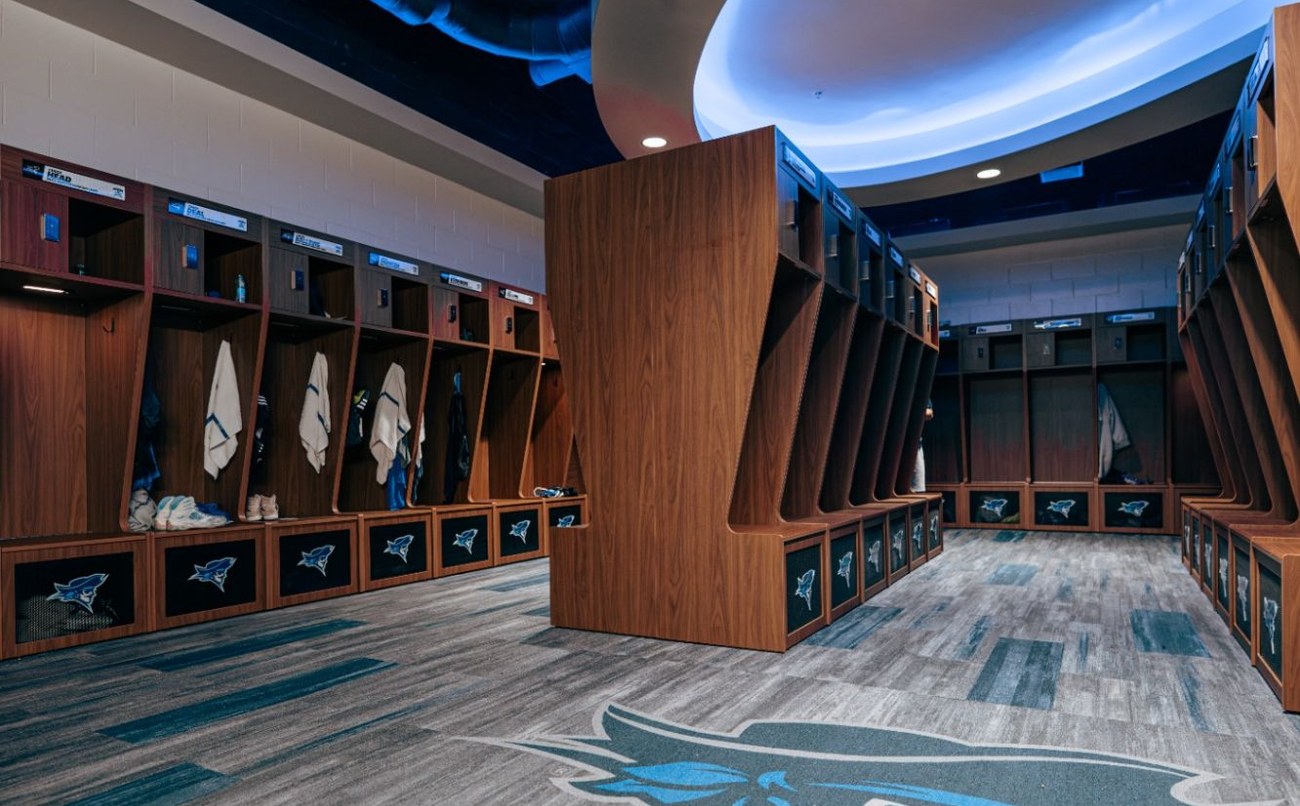
Programs that invest in quality locker rooms, custom wood, team branding, professional organization, communicate that they’re serious at the same level as the programs recruiting their players. That message matters in a state where the recruiting competition for top talent is intense both at the college level and between high school programs competing for incoming freshmen.
We’ve spoken with Georgia coaches who attribute improved in-state commitment rates directly to locker room upgrades. The correlation isn’t scientifically controlled, but coaches who compete for recruits every year know what they’re seeing.
Multi-Sport Growth Adds Complexity
Georgia football is king, but the state’s growth in soccer, basketball, baseball, and track means that Georgia athletic directors increasingly manage multi-sport facilities. A locker room designed exclusively for football in 2010 may now need to serve the soccer team in fall, the basketball team in winter, and the baseball team in spring. That shift in program mix requires flexible locker configurations, something our modular interior systems handle well.
Visit our high school locker room renovation guide for a complete framework on planning a multi-sport renovation.
Georgia’s Humidity Problem, and the Right Solution
Georgia’s climate is one of the most demanding in the country for locker room materials. Here’s what that means in practical terms.
Atlanta averages over 70% relative humidity from May through September. Savannah, Augusta, and southern Georgia run higher, 80%+ during summer months is common. That humidity doesn’t stay outside. It moves into locker rooms through ventilation systems, on wet equipment, and on players’ gear after outdoor practice in August heat. The locker room environment in a Georgia high school in August is genuinely humid.
Metal lockers fail in this environment systematically. Rust forms at the base where moisture pools on the floor. Corrosion starts at hardware contact points, bolts, hinges, handle mounting holes, and spreads outward. The painted finish on metal lockers blisters and flakes under repeated moisture-and-dry cycles, leaving exposed metal that corrodes faster. Georgia programs that installed metal lockers in the early 2010s are dealing with structural failure right now. The programs that installed them in the early 2000s are on their second or third replacement cycle.
The math is damaging: metal at $200 per unit looks cheap on day one. With 8–10 year replacement cycles you spend $400–$600 per locker over 20 years on lockers that looked increasingly bad for the second half of each cycle.
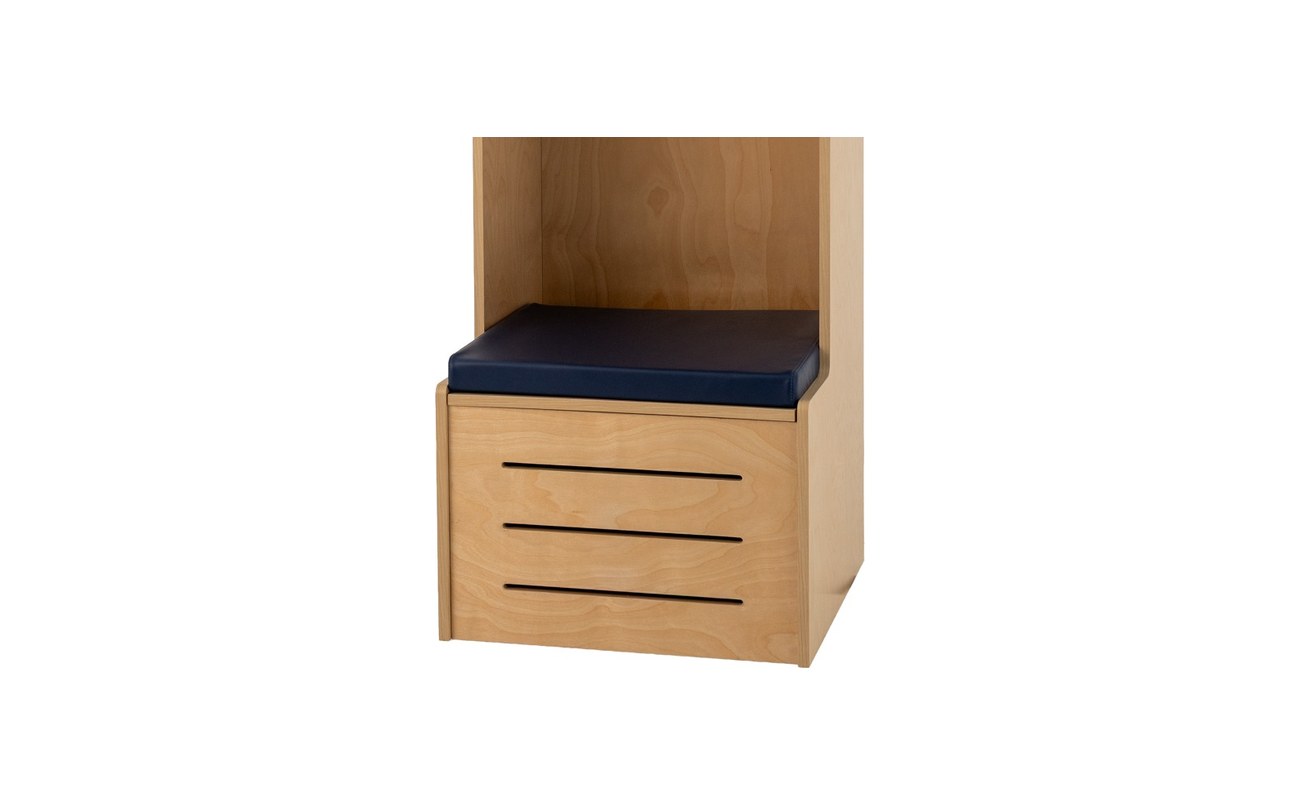
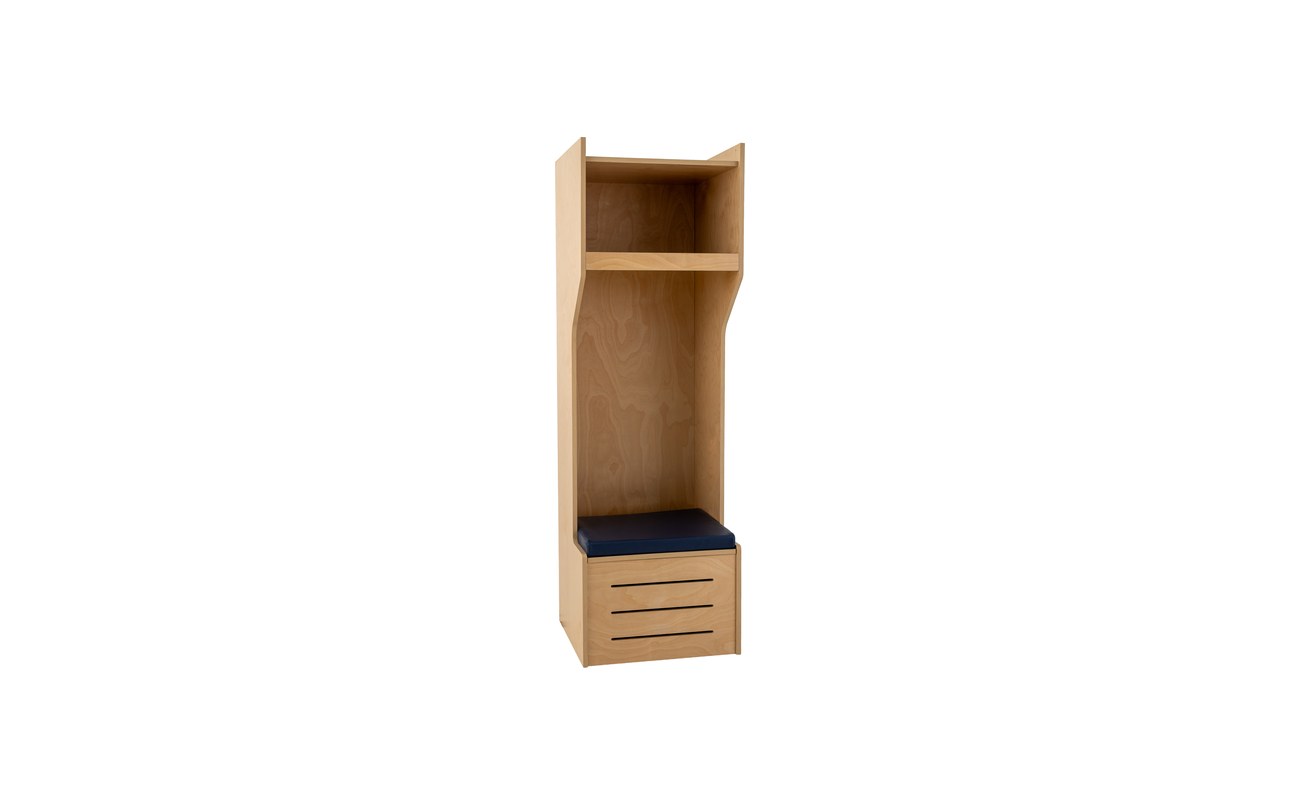
Solid 3/4” birch handles Georgia’s humidity cycle differently. Wood is hygroscopic, it absorbs and releases moisture gradually rather than trapping it at corrosion-prone contact points. Our lockers are sealed with high-quality finishes that protect the surface and include ventilation gaps in doors and side panels that allow air to move through the locker rather than pool against equipment. The result is a locker that still looks professional in year 15 and doesn’t need replacing before year 20.
Think of it this way: wood houses in Georgia’s coastal areas, built and maintained properly, last generations. Metal sheds in the same climate rust through in a decade. The same principle applies at the locker scale.
For a complete material comparison, our 2026 sports lockers buying guide covers the full wood vs. metal analysis with climate-specific context.
SPLOST and Other Funding Mechanisms in Georgia
Georgia has a funding mechanism that most other states don’t: SPLOST, and understanding it can materially change how you approach your locker room project.
What SPLOST Is and How It Works
Special Purpose Local Option Sales Tax is a Georgia-specific instrument that allows county voters to approve a temporary 1% sales tax increase for specific capital projects. Unlike operating budget funds (which cover salaries, supplies, and maintenance) and unlike general obligation bonds (which require debt service over 20+ years), SPLOST money is purpose-restricted capital that can only be spent on the projects voters approve.
Athletic facility improvements, including locker rooms, weight rooms, and field upgrades, are a common and popular SPLOST category. Georgia counties have used SPLOST rounds to fund complete athletic facility overhauls, including full locker room renovations, that would otherwise require multi-year bond campaigns or general fund raids.
How to Position Your Project for SPLOST
If your county has a SPLOST round approaching, the window to get athletic facilities included in the project list is before the ballot language is finalized. That typically means working with your superintendent and district facilities office 12–18 months before the expected vote. Athletic facility renovations that include locker rooms, accessibility upgrades, and energy-efficient equipment tend to perform well with voters, they’re visible, tangible improvements that parents and community members understand immediately.
If your county’s SPLOST cycle is several years out, other mechanisms include capital improvement funds from the district’s operating budget (best for smaller projects), bond issues for larger comprehensive renovations, and booster club campaigns that can cover $15,000–$50,000 in contributions toward a named facility. The “XYZ Family Football Locker Room” naming opportunity is a reliable donor retention vehicle at the right program and budget level.
Our athletic director’s locker room selection guide includes a framework for building the budget case to school boards and community stakeholders.
Sizing Guide for Georgia’s Major Sports
Football: Size for the Full Kit
Georgia football programs should plan for 24”–30” wide lockers as the minimum. The equipment volume is the same as Ohio or Texas, two helmets, multiple sets of shoulder pads, home and away uniforms, multiple footwear pairs, and personal gear, and it doesn’t fit in an 18” locker.
Here are the specs we recommend for Georgia football programs:
Width: 24” minimum for shared-sport rooms; 27”–30” preferred for dedicated football installations. Offensive and defensive linemen carry more equipment bulk than skill positions, and planning to the upper end of the range eliminates the configuration problems that underpowered lockers create.
Height: 76” standard. Overhead helmet shelf, hanging rod for uniforms, lower pad shelf, and a cleat compartment should all be included in the interior configuration.
Depth: 24” standard handles football equipment well.
Class 7A programs in metro Atlanta competing for D1 recruits should consider the Stadium ($599) tier for the finish quality and customization options that match what recruits see on campus visits.
Basketball, Baseball, and Soccer
Basketball programs in Georgia’s competitive suburban counties, Gwinnett, DeKalb, Cobb, recruit hard and tour facilities as part of that process. An 18”–24” wide locker handles basketball equipment well; the investment is in finish quality, team branding, and professional appearance.
Georgia baseball programs need attention to bat storage, a dedicated vertical bat column in a 24”–27” locker, alongside a helmet shelf and uniform hanging space. Soccer programs at 18”–20” width with ventilated doors (cleats and shin guards need to dry) work well for most programs.
Choosing the Right Locker Tier for Your GHSA Program
Here’s how our tiers map to Georgia’s competitive landscape:
Semi Pro ($399), Entry point for Class A and Class 2A programs doing a first renovation on a tight budget. Handles standard equipment volume competently. Best for programs under 40 lockers with modest customization needs.
Varsity ($499), The right choice for competitive Class 3A, 4A, and 5A programs. Enhanced interior configuration, customization options for team colors and nameplates, and the finish quality that registers positively on a recruiting visit. The most common tier for Georgia high school programs.
Stadium ($599), Appropriate for Class 6A and 7A programs where the locker room competes directly against college facility impressions. Full customization options, premium finish, and interior configurations that handle high-volume football or multi-sport use.
Model L ($649), Premium curved-door design that makes a flagship statement. Best for programs with a clear vision for a world-class facility and the budget to execute it. Strong return on investment for programs that host recruiting events, media days, and community donor events.
Stadium ($599), Wide-format design built for football’s equipment demands. Programs with 80+ roster players and serious facility goals land here.
Every tier is solid 3/4” birch, not particleboard, not laminate. Every tier carries our five year guarantee.
Typical Project Costs and Timelines
Budget Framework for Georgia Programs
Budget a 50–60 locker room from the per-locker tier price, plus freight and installation. Class 6A and 7A programs typically specify the Stadium tier at $599 per locker for similar counts.
Programs doing full facility renovations, new flooring, ventilation upgrades, lighting, ADA accessibility retrofits alongside new lockers, require coordination with additional contractors. The locker installation happens after floor, electrical, and ventilation work is complete.
Georgia high school athletic facilities must meet ADA accessibility standards. ADA’s 2010 standards require at least one accessible locker per 25 standard lockers, 36” minimum aisle widths, and clear floor space of 30” × 48” in front of accessible units. Build these requirements into your design from day one, retrofitting after installation costs more and looks worse.
Timeline for Georgia Programs
Georgia athletic directors targeting summer installation should start the planning process in January or February. Two-a-days in Georgia run August, and you want the locker room complete before that first day of fall camp. Working backwards from an August 1 target:
- February: Initial consultation, space measurement, design review
- March: Board or SPLOST documentation, order approval
- April: Order placed; fabrication begins (6–10 week lead time)
- June: Lockers arrive; installation begins (3–5 days on-site)
- July: Complete, tested, and ready for fall
Programs that contact us in May for a July delivery are working in a tight window. Programs that contact us in February have the timeline working for them, not against them.
Book your free design consultation today and we’ll build a project plan matched to your Georgia program’s calendar and funding cycle.
Frequently Asked Questions
How does Georgia’s humidity affect metal vs. wood sports lockers?
Georgia’s humidity is among the worst in the country for metal locker rooms. Atlanta averages over 70% relative humidity in summer, and coastal and southern districts run even higher. Metal lockers in Georgia programs typically show rust at the base within 3–5 years, with significant corrosion and paint failure by year 8. Cleaning chemicals accelerate the problem. Our solid 3/4” birch construction with sealed finishes handles Georgia’s humidity cycle without the corrosion that plagues metal. We build ventilation gaps into every locker so moisture moves through rather than pooling at metal contact points.
What is SPLOST funding and how do Georgia districts use it for locker rooms?
SPLOST stands for Special Purpose Local Option Sales Tax, a Georgia-specific funding mechanism that allows counties to levy a temporary 1% sales tax for specific capital projects approved by voters. Unlike operating budget funds, SPLOST money can only be used for capital improvements, and athletic facilities are a common approved use. Georgia districts have used SPLOST to fund entire athletic facility renovations, including locker room upgrades, weight rooms, and stadium improvements. If your county has a SPLOST cycle coming up, coordinating your locker room project with that timeline is worth exploring with your district’s finance office.
What size lockers do Georgia football programs need?
Georgia football programs should plan for 24”–30” wide lockers to accommodate full equipment kits. The state produces more D1 football recruits than almost any other, and those programs need locker rooms sized for serious football gear: two helmets, multiple sets of pads, home and away uniforms, cleats, and personal gear. We recommend 24” as the minimum for a shared-use locker room and 27”–30” for dedicated football installations. Interior configuration should include an overhead helmet shelf, hanging rod, lower pad shelf, and a cleat compartment.
How does a locker room affect football recruiting in Georgia?
In Georgia, where the state produces elite D1 football prospects at a rate that puts it among the top three states nationally, facilities are a primary differentiating factor in the decision to stay in-state versus follow the best facility offer. A prospect visiting three programs on a weekend will make mental notes about the locker room on every tour. Programs with custom wood lockers, team branding, and professional organization communicate seriousness. Programs with rusted metal lockers from 2008 communicate the opposite.
What locker tier is right for a GHSA Class 6A or 7A program?
GHSA’s largest programs, Class 6A and 7A schools competing in metro Atlanta and major suburban markets, typically land at the Stadium ($599) tier. These programs recruit against D1 schools and need locker rooms that compete visually with what prospects see on campus visits. Varsity ($499) works well for competitive Class 4A and 5A programs. Semi Pro ($399) is the entry point for lower-enrollment schools doing a first upgrade. Every tier is built from solid 3/4” birch with our five year guarantee.
How far in advance should Georgia athletic directors plan a locker room project for summer installation?
Start 4–6 months before your target completion date. For a summer installation completed before August two-a-days, begin the process no later than February. Our fabrication lead time is 6–10 weeks from confirmed order. Georgia’s summer heat means installation crews want to work in June and early July, not August, so getting your order in by April is the practical target. Programs that wait until May hoping for a July installation almost always push into August or fall.
Georgia Athletics Deserves a Locker Room to Match
Georgia produces elite athletes at every level. The state’s programs, from Class 7A powerhouses in Gwinnett County to Class 4A programs in smaller cities, compete at a level that demands professional facilities.
The locker room is the first impression every recruit forms and the daily environment every returning player lives in. When that environment is aging metal that’s rusting in Georgia’s humidity, it communicates something about the program that no amount of coaching quality or recruiting enthusiasm can fully override.
Custom wood sports lockers built for Georgia’s climate, sealed against humidity, ventilated for airflow, sized for football’s equipment demands, will serve your program for 15–20 years and look sharp on every recruiting visit. After over 35 years building locker rooms for programs across North America, we know what works in Georgia’s climate and competitive environment.
The SPLOST cycle is coming. The bond proposal is being planned. The booster campaign is getting organized. The question isn’t whether to upgrade, it’s whether you’re in position to do it right.
Contact us for a free custom design consultation, we’ll design a locker room built for Georgia’s climate, your program’s sports, and your specific budget, backed by our five year guarantee.
Explore all of our custom wood sports locker options or continue with our complete 2026 buyers guide.